
Margaret Wade Labarge Prize
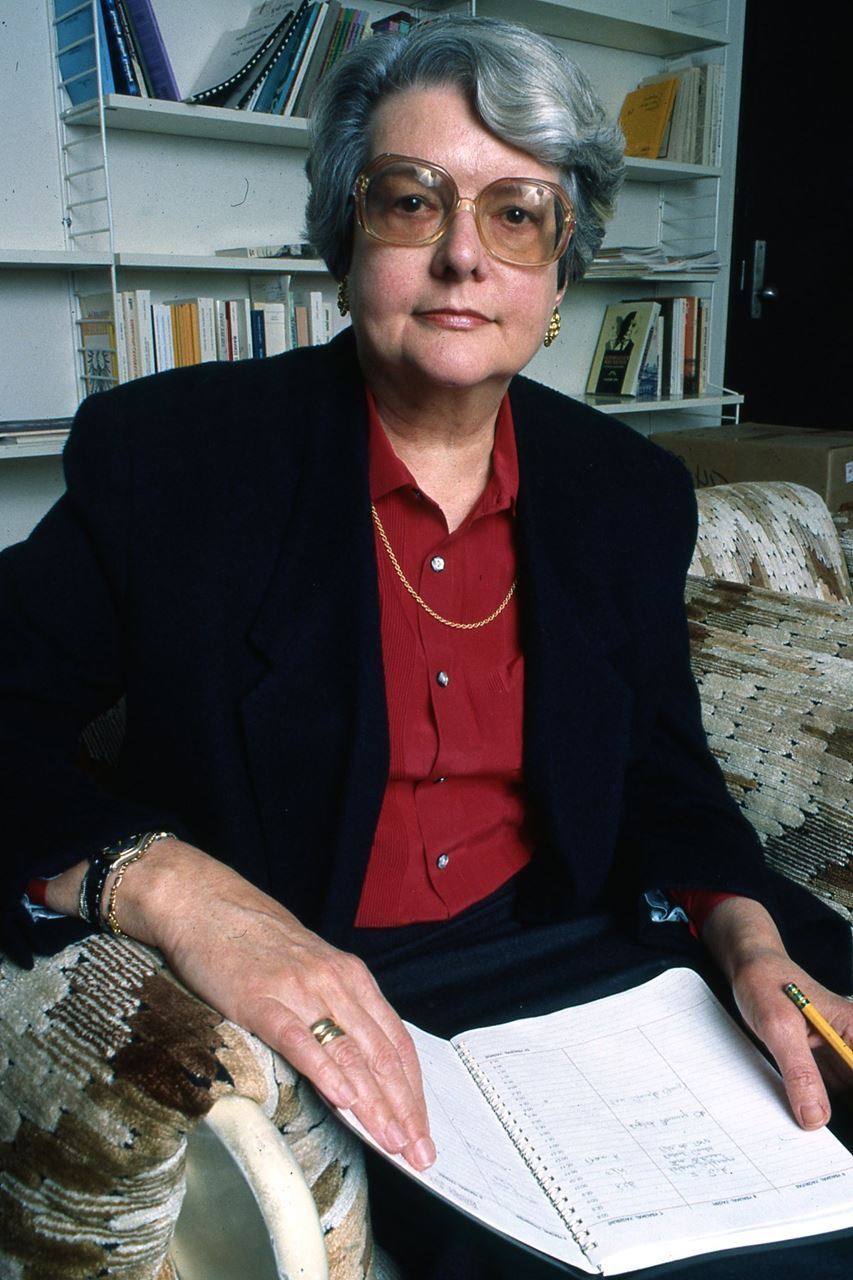
The prize for the best book published by a Canadian medievalist is named for the Society’s first President Dr Margaret Wade Labarge. It was instantly dubbed “The Polly,” reflecting the nickname by which this warm and beloved medievalist was known from coast to coast.
Throughout her career Dr Labarge was an academic anomaly. She was an inspiring figure and a respected independent scholar. Although she taught at Carleton and Ottawa from time to time, she did not hold a full-time academic appointment. Nevertheless, she was a sought-after speaker and her scholarship was acclaimed across Canada and throughout the United Kingdom and the United States. She wrote nine books on a sweeping array of topics ranging from A Baronial Household of the Thirteenth Century (1965); The Life of Louis IX of France (1968); Medieval Travellers (1982); and perhaps most significantly, Women in Medieval Life (1986), a pioneering monograph dedicated to the study of women in the Middle Ages. Her contributions to medieval studies in Canada was recognized by election to the Royal Society of Canada and appointment to the Order of Canada.
With this award for an outstanding book, the Society seeks to recognize and encourage the quality and diversity of scholarship exhibited by our first President, Margaret Wade Labarge.
| Congratulations!Roisin Cossar and Jason Aaron Brown’s Telling Tales. Clerics, Concubines, and an Inquisitor in Late Medieval Ferrara: A Primary Source Study (University of Toronto Press, 2025) has won the 2026 Margaret Wade Labarge Prize. The Committee's citation reads: Roisin Cossar and Jason Aaron Brown’s Telling Tales. Clerics, Concubines, and an Inquisitor in Late Medieval Ferrara: A Primary Source Study (University of Toronto Press, 2025) is a remarkably rich and innovative work in the craft of history. The book is built around a single, hitherto unpublished primary source: an inquisitor’s register from 1420s Ferrara, northern Italy, recording the interrogation of several dozen women who were living with priests and related proceedings in response to a decree by which the marquis d’Este ordered the expulsion of clerical concubines in 1421. Brown and Cossar offer not only a study of the document but a meticulous guide through every stage of scholarship involved, recruiting the student reader into an open-ended analysis by suggesting further exercises while providing seasoned scholars with a valuable edition and significant commentary. The result is a unique and enthralling book. The translation by Brown is exemplary, while his edition of the Latin text is made available on an accompanying website, alongside manuscript images and a prosopographic database. Cossar’s detailed contextualization of the record vividly illuminates all the participants in the process – from the inquisitor and notaries to the women themselves, their clerical partners, and their broader communities – and extends even to the environmental geography of Ferrara. Her multifaceted interpretation of the evidence and its silences considers alternative readings of the archive both along and against the grain, arguing for surprising possibilities as to “what really happened”: that the inquisition was “a performance of ecclesiastical reform ‘theater’,” which ultimately sought to undermine the secular authority’s attempt to abolish clerical concubinage in Ferrara. Both the translation and the study are systematically interwoven with a metacommentary on the nature and problems of primary sources and how historians handle them, fully exhibiting the mechanics of scholarship for uninitiated readers without compromising the rigor of the analysis and its contribution to current theoretical debates. The book demonstrates compellingly why these technical concerns of method are crucial to telling a story that powerfully (and poignantly) humanizes medieval women as well as clerics, since it foregrounds the production of the inquisitorial register itself as an enigmatic social phenomenon that intervened in the history it documents. It is rare for a work of original scholarship to simultaneously and so successfully address undergraduates, graduate students, and established scholars across a number of fields – gender, religion, and urban history, to mention just a few – making them all feel equally invested in the inquiry. This beautifully written book well deserves an award named in honour of Margaret Wade Labarge, who, the committee feels, would have appreciated it greatly. |


Past Winners of the Margaret Wade Labarge Prize
For further information on the winning books, see the entries below this list.
2025 - Mo Pareles, Nothing Pure: Jewish Law, Christian Supersession, and Bible Translation in Old English (UTP, 2024).
2024 - Rowan Dorin, No Return: Jews, Christians, Usurers and the Spread of Mass Expulsion in Medieval Europe (Princeton UP, 2023).
2022 - Kathryn Kerby-Fulton, The Clerical Proletariat and the Resurgence of Medieval English Poetry (UPenn P, 2021).
2021 - John Osborne, Rome in the Eighth Century: A History in Art (Cambridge University Press, 2020).
2020 - David K. Coley, Death and the Pearl Maiden: Plague, Poetry, England (Columbus: The Ohio State University Press, 2019).
2019 - James Grier, Ademarus Cabannensis Monachus et Musicus. Corpus Christianorum, Autographa Medii Aevi, 7. (Turnhout: Brepols, 2018).